
Water Damage in Home Insurance
What does your home insurance actually cover for leaks? We explain the small print on water damage: exclusions, limits and what to check in Marbella.
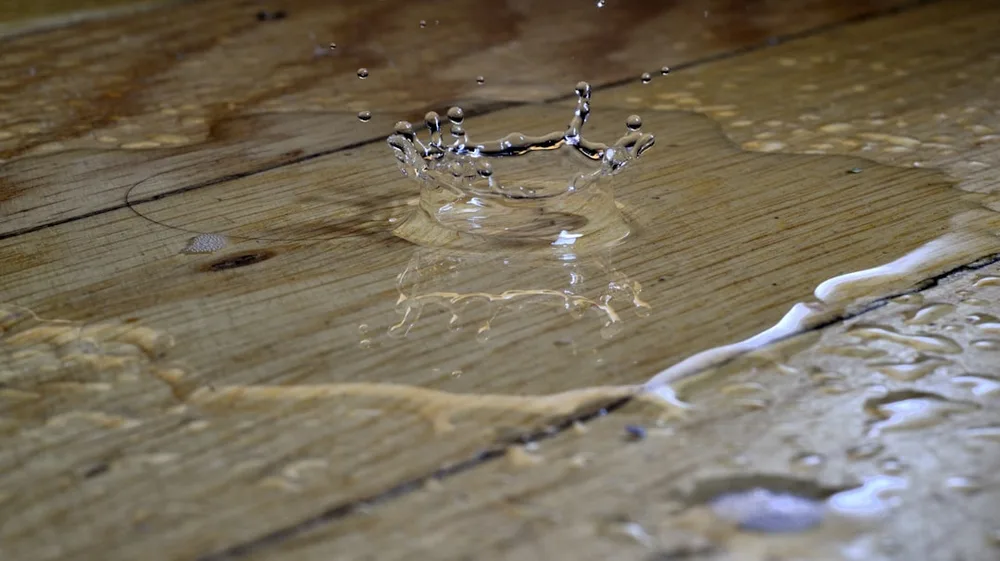
You return to your Costa del Sol apartment after a long bank holiday weekend to find the living room ceiling has caved in, the parquet flooring has lifted, and a damp stain has spread all the way to the adjoining room. The neighbour upstairs had a burst pipe while you were away. Your first call is to your insurer. And your second — if nobody has ever walked you through the small print — is likely to come as quite a shock.
The water damage cover — also referred to as "water action" — is the section of your policy that covers damage caused by water inside or from your property: burst pipes, appliances leaking, water coming through from the flat above, that sort of thing. It is, by some margin, the guarantee within a home insurance policy that generates the most claims — and the one that carries the most small print.
What do people think is covered that actually isn't?
Most people assume that if there's water damage, the insurer will pay. That isn't always the case: there are specific exclusions that rule out very common situations, particularly in Marbella and across the Costa del Sol, where second homes and holiday lets are so prevalent.
Frozen pipes when the property has been unoccupied for several days (admittedly, a hard frost in Marbella is a rare event). In most policies, if your home has been unoccupied for more than 30 days and you haven't drained the pipes and water tank before leaving, any frost damage will not be covered. Some policies reduce that window considerably — in certain cases, just 72 hours without anyone in the property is enough to lose that cover if the installation wasn't drained beforehand. If you have a second home or let it out seasonally, this point is critical.
Corrosion and wear to pipework is another exclusion that appears in virtually every policy's terms and conditions. If your pipes are in poor condition and that causes a leak, the insurer will typically pay for the damage the water has caused — the floor, the ceiling, the affected furniture — but not for the repair of the tap, boiler, or fitting that failed. The item that caused the problem is excluded. And if there is widespread corrosion throughout the installation, many policies will only cover the repair of the specific section that burst, not the rest of the pipework.
Excess water consumption — that eye-watering bill that arrives because you had a slow leak you never noticed — is excluded under many policies. Some policies do include it as an additional cover, with a limit of up to €2,000; others exclude it explicitly. You won't know without reading your policy schedule.
Something that causes a great deal of confusion: your policy covers the damage caused by the water, not the repair of the fault that caused it. If a pipe bursts and soaks the parquet floor, your insurer will generally pay for the flooring. The replacement pipe, in many cases, is down to you.
When does cover apply — and when doesn't it?
Water damage cover typically kicks in when there is an accidental and unforeseen escape of water: a pipe that gives way, a washing machine that leaks, a cracked bathroom trap, water coming through from the flat above. In such cases, the damage to your home — and sometimes to your downstairs neighbour's property — is usually covered.
However, there are situations where cover does not apply, and it is worth being clear on these:
- The property has been unoccupied for more than 30 days (in some policies, more than 72 hours) and the installation was not drained before you left.
- The fault stems from gradual deterioration or corrosion that pre-existed the claim and that the owner knew about or should reasonably have detected.
- The damage is a direct result of an obvious lack of maintenance.
- In some policies, if you have already made a water damage claim during the same policy year, a second incident may not be covered.
What about damage to communal pipes or a neighbour's property?
Damage you cause to your downstairs neighbour is generally covered under the public liability section of your policy, not under the water damage guarantee itself. They are two distinct things: one covers your own property, the other covers third-party losses.
As for communal pipework — pipes that run through party walls or are the responsibility of the building's residents' association — most home insurance policies limit cover to the private pipework within your own dwelling. Some policies, at higher levels of cover, do include tracing and repairing faults in communal pipes, but this is not standard: it is a differentiating feature worth looking for if you live in a managed building.
How much will the insurer pay? Are there limits that aren't immediately obvious?
This is where water damage cover becomes harder to compare, because it is limited in very different ways depending on the policy. There are three common mechanisms worth understanding:
The first is the excess — the amount you pay out of your own pocket before the insurer steps in. The figure varies depending on your policy, so do check yours.
The second is sub-limits: specific caps applied to certain items within the water damage guarantee. Some policies, for example, limit the pay-out for corrosion-related damage to a fixed amount, regardless of the actual loss. These sub-limits are the ones that tend to cause the most unpleasant surprises, as they don't appear on the front page of your policy.
The third is the number of claims covered per year. Some policies cap the number of water damage claims at one per policy year for certain types of incident. If you have two separate incidents in the same year, the second may not be covered.
What should you check in your policy right now?
- Unoccupancy period: how many days can your property sit empty before the terms of your cover change? Thirty days? Seventy-two hours? If you have a second home or a holiday let, this is the first thing you need to know.
- Obligations before you leave: does your policy require you to turn off the stopcock or drain the installation if the property is to be left empty? Some policies make this an explicit condition, and if you don't comply, any subsequent claim will be void.
- Is the item that caused the damage covered? The tap, boiler, or washing machine that failed — is that covered, or only the damage it caused?
- Are there sub-limits for corrosion or deterioration? Check whether there are specific maximum amounts for these scenarios, separate from the overall guarantee limit.
- Excess water consumption: does your policy cover this? Up to what amount and under what conditions?
- Communal pipework: is it included, or does cover extend only to the pipes within your own property?
- Annual claims limit: is there a cap on the number of claims you can make under this guarantee in any one policy year?
If you have any doubts about any of these points, don't leave them until something goes wrong. That is precisely the conversation you should be having with your broker before the water arrives.
Not sure exactly what your home insurance covers? Message us and we'll review it with you.
We're independent insurance brokers in Marbella. We compare the best options for you at no cost.
Would you rather we reviewed the policy you already have? Review my policy