
Glass breakage cover in car insurance: what's included
Find out exactly what your car insurance glass breakage cover includes and excludes. Plain-English advice from your Marbella insurance broker.
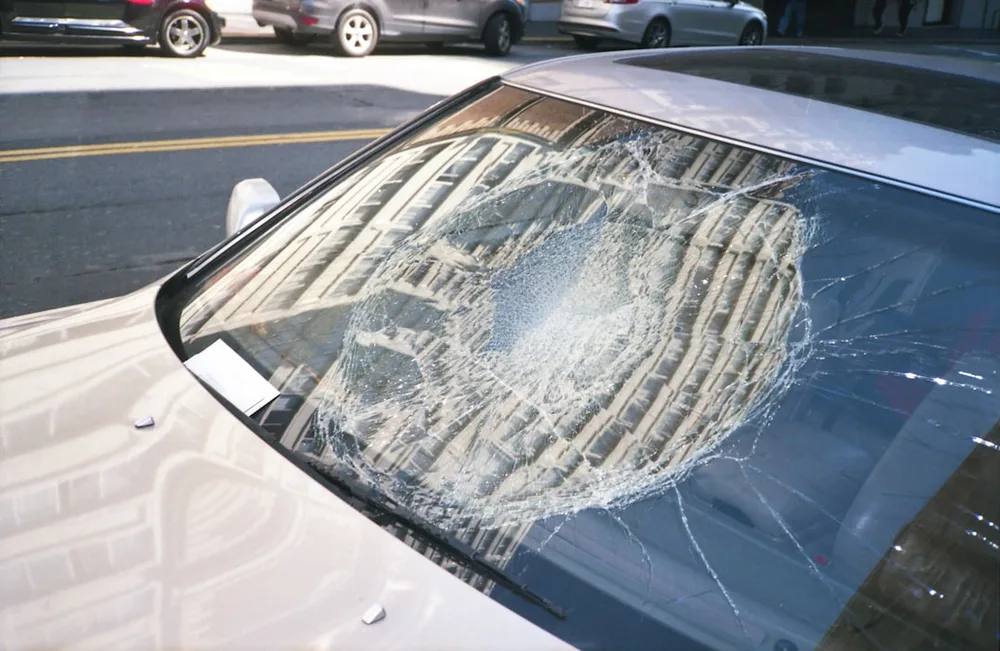
You're parked along the Paseo Marítimo in Marbella, you return to your car and find the windscreen cracked from side to side. A stone, an impact, whatever the cause. You call your insurer, confident you have glass breakage cover — the guarantee that covers your vehicle's windows — and then the small print kicks in. Sound familiar? Read on, because there are details here that may well catch you off guard.
What does glass breakage cover actually include?
Glass breakage cover pays for the repair or replacement of your vehicle's windows when they are accidentally damaged — a stone on the motorway, hail, a falling object. That's the general idea. The difficulty lies in what exactly counts as "glass" and what conditions must be met for the cover to actually apply.
If you have a car insurance policy on the Costa del Sol, what you read here applies directly to you.
What do people assume is covered that actually isn't?
Most people assume that "glass" means any glass component on the vehicle — but that's not always the case. In some policies, wing mirrors, the interior rear-view mirror, and headlight lenses are expressly excluded from this cover. For insurance purposes, they are not considered "glass," even though they are made of it.
Another source of confusion is the sunroof. In some policies it is only covered if it was fitted as standard or if it was expressly declared when the policy was taken out. If you had it installed after the vehicle was registered and didn't notify your insurer, some policies will exclude it altogether.
Then there's the matter of modern technology. Today's windscreens can incorporate rain sensors, driver-assistance cameras, navigation systems, or even a head-up display — the projection of information onto the glass. Some policies expressly exclude windscreens that integrate these kinds of systems. Others include them. Two seemingly similar policies can give you completely different outcomes for the same claim. And the recalibration of cameras after a windscreen replacement can run to several hundred pounds — an expense that falls entirely on you if your policy doesn't cover it.
When does the cover apply, and when doesn't it?
Cover generally applies when the damage is accidental and affects the glass elements recognised as such under the policy terms. However, there are two conditions that many people are unaware of, and which can significantly affect the outcome.
The first: in many policies you are not paid out in cash. If your windscreen breaks and you choose not to have it repaired or replaced, you receive nothing. The cover pays for the repair or replacement — it does not give you money to spend as you see fit.
The second: financial limits. Some policies set a maximum amount per claim that can be quite restrictive. For older vehicles or those with specialist glass, the actual cost can easily exceed that limit, and you pick up the difference. Some policies also combine that cap with an excess — the portion of the cost you always bear before the insurer steps in — which, while not especially common for this type of cover, does exist.
Will making a glass breakage claim affect my premium?
Using this cover typically has an impact on your no-claims bonus — the system by which your claims history causes your premium to rise or fall. As a rule, declaring a glass breakage claim moves you up one level on that scale, unless the repair is carried out at a garage within the insurer's approved network.
In some policies the rules are even more granular: if the windscreen is repaired (rather than replaced) using the insurer's own approved services, the claim is not recorded at all. If it is replaced through that same network, it counts as half an event. If you opt for a garage outside the recommended network, it may count as a full event from the second claim onwards. Not every policy works this way, but it illustrates just how much it can matter where you take your car.
What should I check in my policy before I need it?
Before anything happens, open your policy's terms and conditions and check the following points:
- What counts as "glass" under your policy. Confirm whether wing mirrors, headlight lenses, the sunroof panel, or any other glass elements are expressly included or excluded.
- Whether your vehicle has technology integrated into the windscreen. ADAS cameras, rain sensors, head-up displays, or integrated aerials may or may not be covered depending on your policy. If it isn't stated clearly, ask before assuming you're covered.
- Whether there is a maximum claim limit. Compare that figure against the approximate cost of a replacement windscreen for your vehicle, including labour and any required recalibration.
- Whether an excess applies. It's not the most common feature for this type of cover, but it does exist in some policies. Check.
- Whether the sunroof is covered. And if you had one fitted yourself, confirm whether you declared it at the time.
- How claims affect your no-claims bonus. Ask whether using this cover moves you up a level and under what circumstances you can avoid that by choosing the right repairer.
- Whether the policy pays in cash or in kind. Most policies pay the repairer directly rather than reimbursing you in cash.
Paying too much for your vehicle insurance? Message us and we'll compare it with you.
We're independent insurance brokers in Marbella. We compare the best options for you at no cost.
Would you rather we reviewed the policy you already have? Review my policy